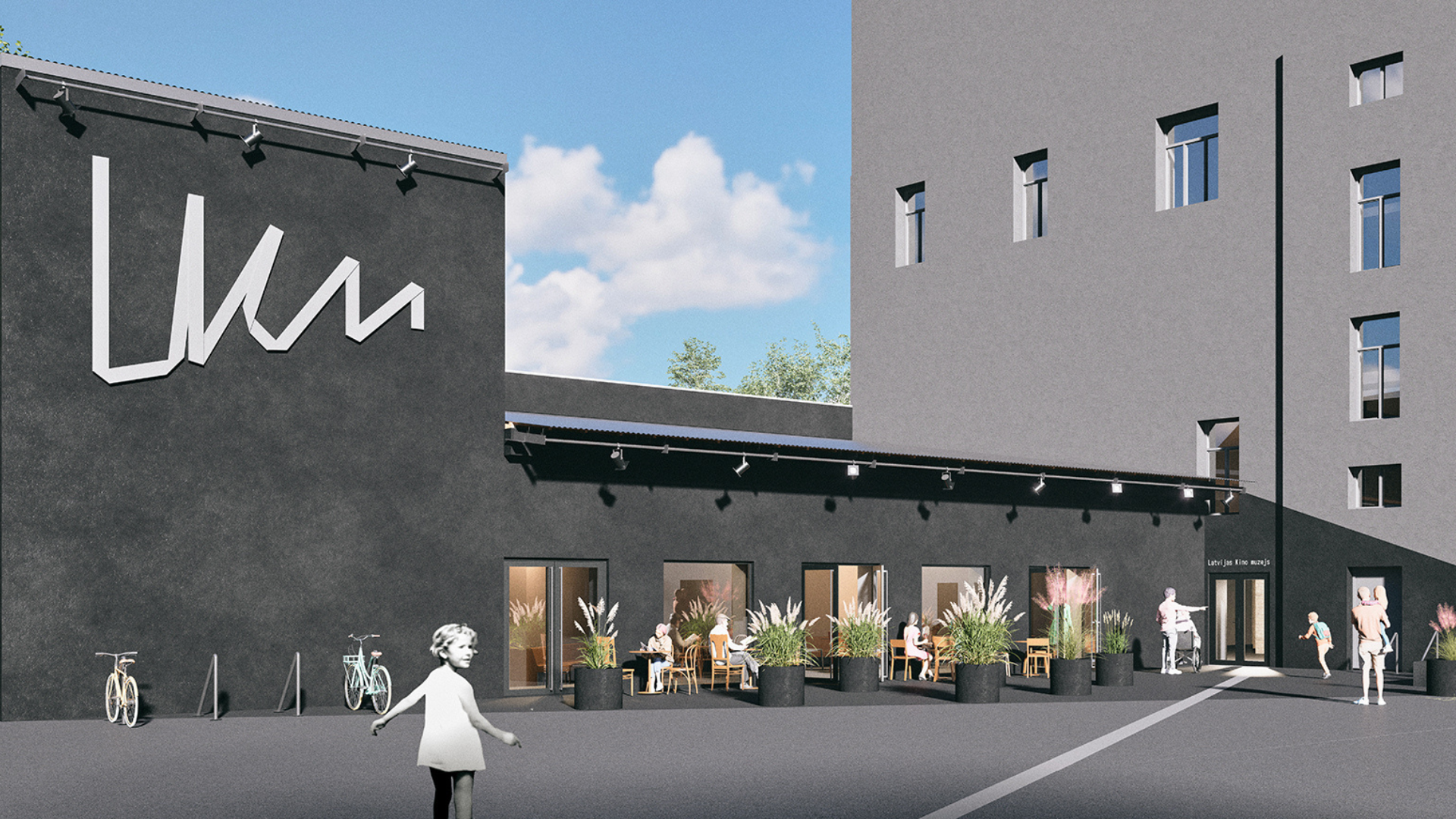
The exhibition spaces of the Latvian Film Museum in Riga, Miera Street 58a are temporarily closed!

The main exhibition “Stories of Latvian Cinema” and the construction of the cinema hall are underway!

We invite you to follow the information on the website www.kinomuzejs.lv and our social networks and attend the events of the Latvian Film Museum in the premises of the National Film School and elsewhere!

To contact the staff of the museum, please write or call:
+371 29119544 or kinomuzejs@kinomuzejs.lv.

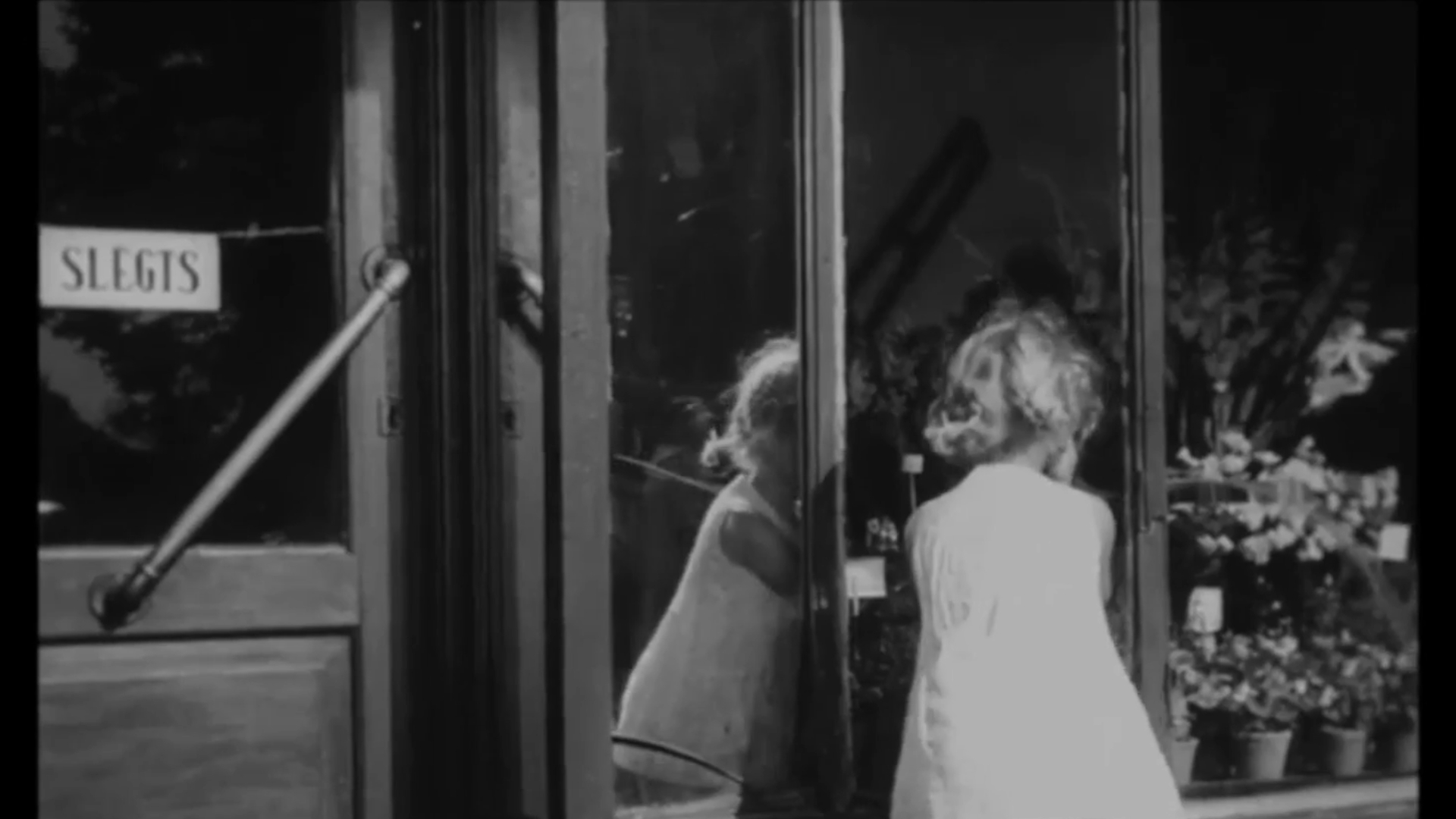
Photo: A scene from the film “White Bells” (Ivars Kraulītis, 1961)

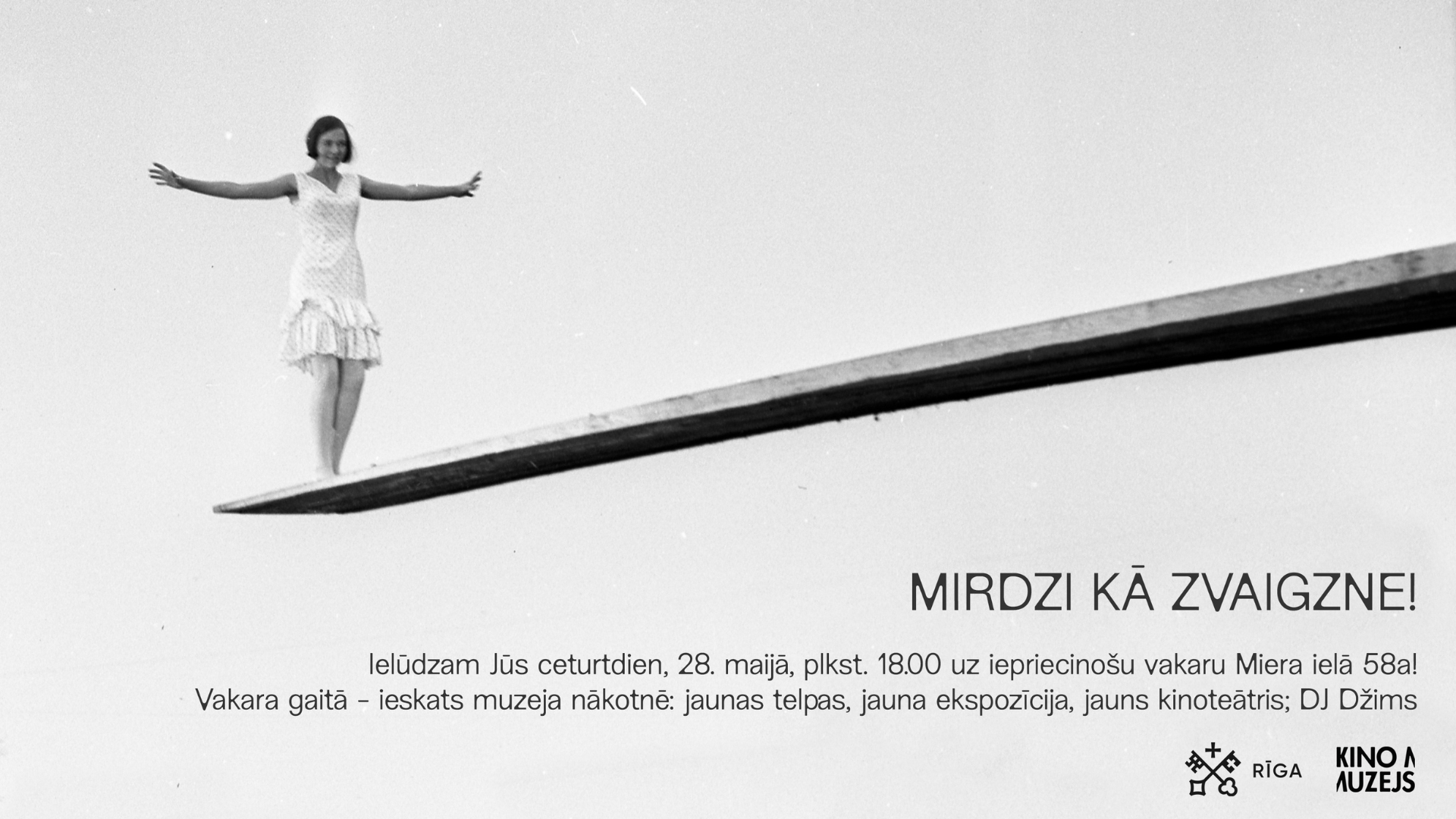
Shine Like a Star!

We invite you to join us on Thursday, May 28, at 6:00 p.m. for an enjoyable evening at 58a Miera Street!

The evening will feature a glimpse into the museum’s future: new spaces, a new exhibition, a new cinema, and DJ Džims!

Please note: The event will primarily be conducted in Latvian, with no English translation available.


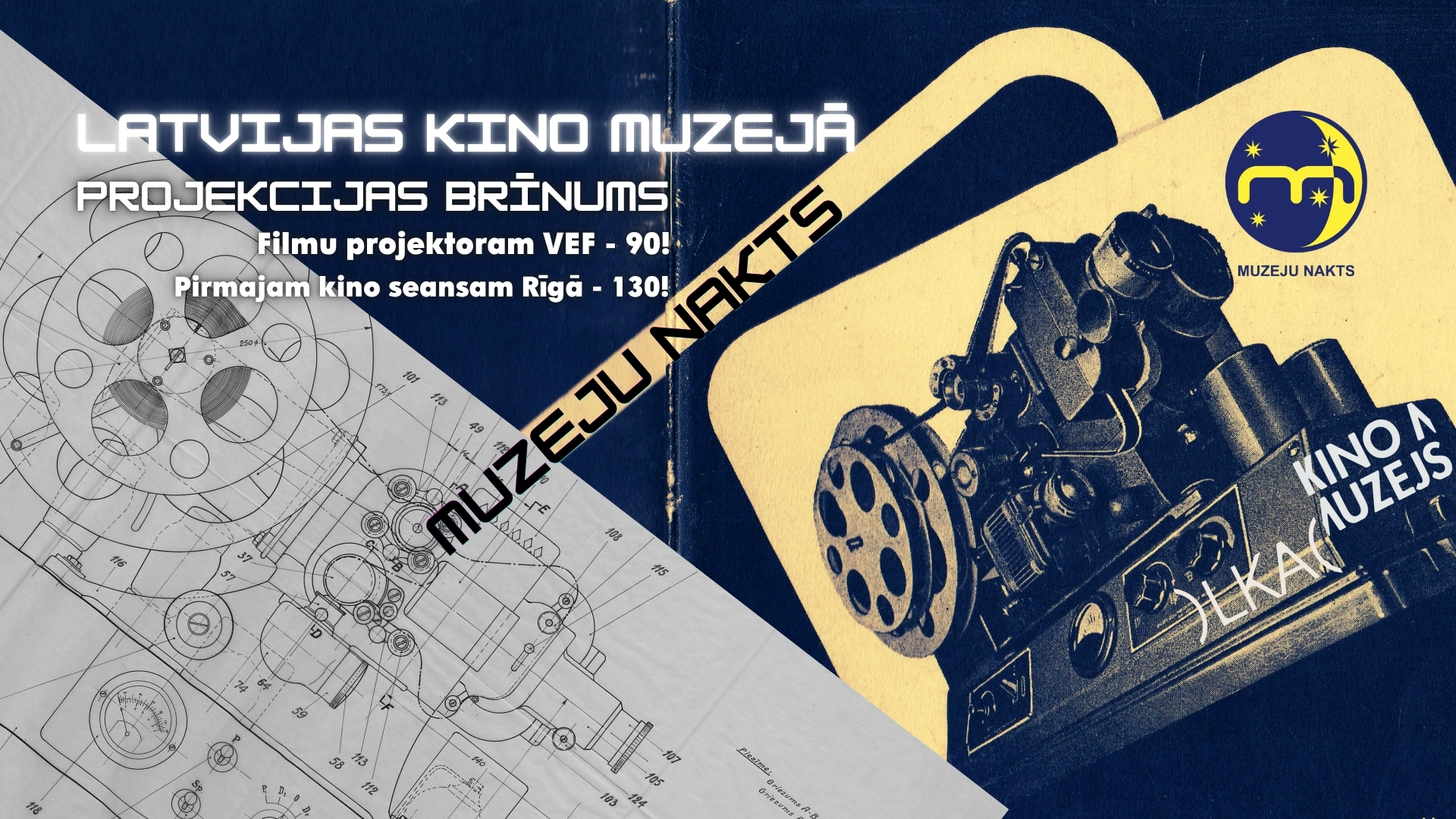
Museum Night at the Latvian Film Museum — THE WONDER OF PROJECTION

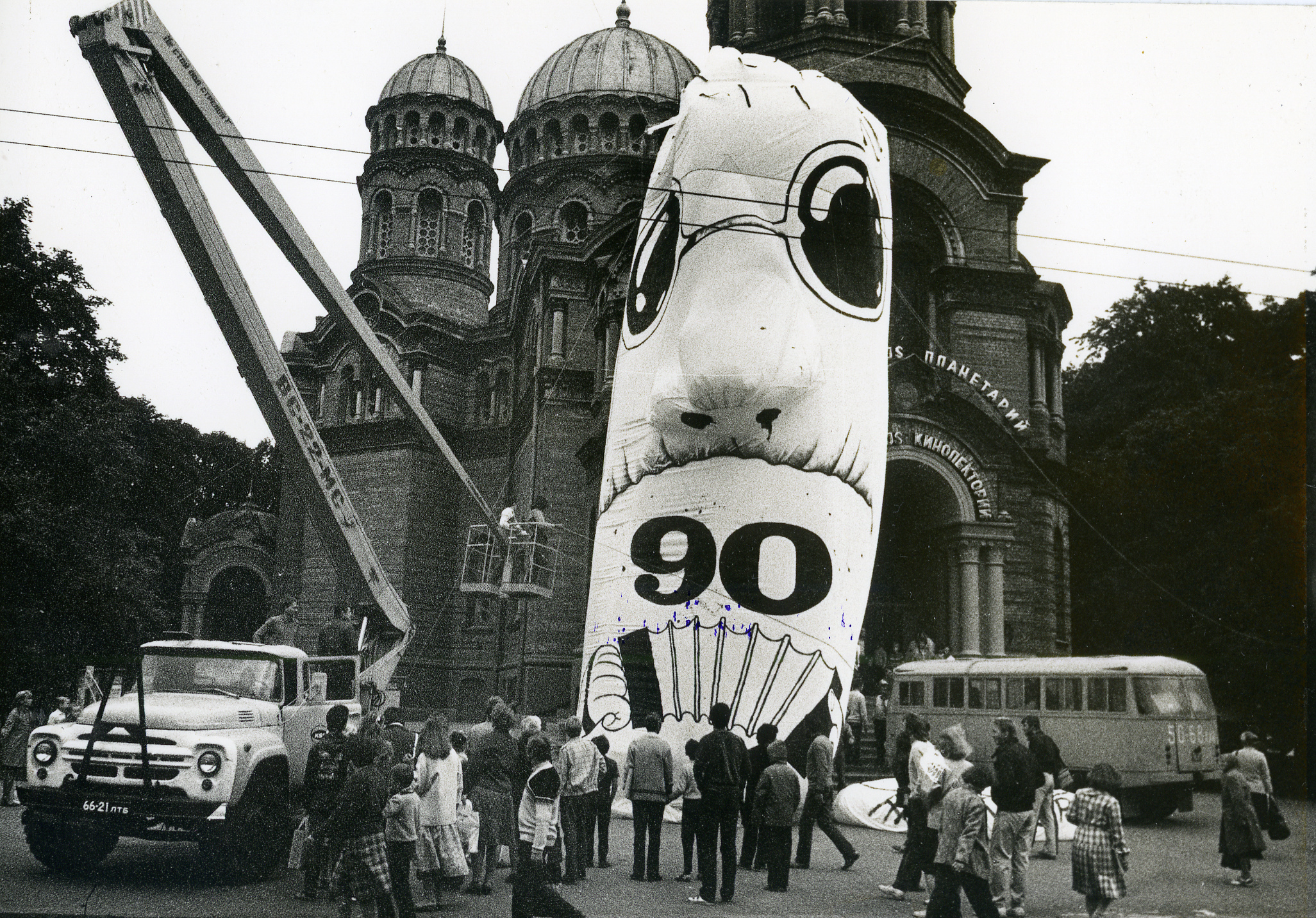
The VEF-90 film projector turns 90!
The first movie screening in Riga turns 130!

As part of Museum Night: “Adventures of an Object,” the LKA Latvian Film Museum (Riga, Miera iela 58a) invites you to a Museum Night adventure on May 23, 2026, from 7:00 p.m. to 11:00 p.m., dedicated to the only film projector manufactured in independent Latvia. At the Latvian Film Museum, you will have the opportunity to view the VEF film projector and learn about its history. We will mark the 130th anniversary of the first film screening in Riga with film screenings.

In the courtyard at 58a Miera Street, at the venue near the National Film School, a video projection will offer the chance to watch films by the Lumière brothers—Auguste and Louis—shot with an early film camera, the cinematograph. Latvian audiences first saw them on May 28, 1896, in Riga at 11 Kaļķu Street (the first film screening at Līvu Square is marked by a commemorative plaque). At the time, films shot with the cinematograph were called “living photographs,” and today we see that the name was accurate—thanks to these films, the 130-year-old past is still alive! The film program is 15 minutes long and will be shown repeatedly without intermissions. During Museum Night from 7:00 PM to 11:00 PM.

The VEF film projector, which was available in both 16 mm and 35 mm versions, was manufactured at the Latvian State Electrical Engineering Factory in the second half of the 1930s. In 1935, a prototype of the projector was created, with which films were screened for Latvian Prime Minister Kārlis Ulmanis and government representatives; however, production and sales of the projector began in 1936, so we can celebrate the 90th anniversary of the VEF projector. The VEF narrow-gauge film projector attests both to the high level of technological development achieved during the first phase of Latvia’s independence and to the ability to create a harmonious design in line with global fashion trends of the era!

Due to a lack of compatible parts, we can no longer operate the VEF film projector; therefore, we will introduce visitors to the analog film projection process using later-model
film projectors manufactured in the second half of the 20th century, such as the Soviet-made KN-15.

Admission to Museum Night events is free! We thank the VEF History Museum, the Ministry of Culture of the Republic of Latvia, the LKA National Film School, the Latvian Academy of Culture, Museum Night in Latvia, director Jānis Putniņš, and other friends of the Latvian Film Museum for their support!


“CINEMA OBJECT” – screen, line, cubes

At the LKA National Film School at 58a Miera Street, “CINEMA OBJECT” – screen, line, cubes – talks about film education in Latvia.

The Latvian Academy of Culture was founded in 1990. During its first decade, professionals such as Kalvis Zalcmanis, Ansis Epners, Pēteris Krilovs, Valdis Eglītis, Bruno Aščuks, Inga Pērkone, Lauris Gundars, and others worked on developing the highest-level film education programs and served as lecturers at the academy. Most Latvian filmmakers are graduates of the academy.
Thirty-five years is a period of time that has itself become a history worthy of research.

Research into film education has begun and continues thanks to the support of the LKA program “Development of Scientific Activity at the Latvian Academy of Culture.” The aim of the project is to research the history of film education in Latvia, providing an in-depth analysis and description of the contribution of the Latvian Academy of Culture to film education at the higher education level. The project is a joint effort of the Latvian Academy of Culture’s Department of Audiovisual Arts (LKA National Film School) and the Latvian Film Museum.

The research has resulted in video interviews with the creators, lecturers and graduates of the LKA film education program: cinematographer, educator, Professor Honoris Causa Valdis Eglītis, professor and film scholar Inga Pērkone, director, educator, LKA professor Pēteris Krilovs, director Gatis Šmits, cinematographer, educator, Professor Honoris Causa Valdis Eglītis, film scholar Agris Redovičs, director, LKA lecturer Andrejs Verhoustinskis, and director Anna Viduleja. Excerpts from interviews and films made by students can be viewed on screen.

The concise timeline highlights the years and places – these are milestones that tell the story of the beginnings and development of film education, from the first programs on Ludzas Street to the National Film School at 58a Miera Street, where film directors, cinematographers, editors, producers, and theorists can receive their education.

Cubes also “speak” about the history of film education in the “Cinema Object”. On one, we can read the titles of student films (“My Hobby is Life,” “Everything is Fine,” etc.), on another, the titles of Inga Pērkone’s books (“I Can Only Love… The Image of Women in Latvian Films,” etc.)(books are not available in english), while yet another displays quotes from Valdis Eglītis (“The best collaboration and results, of course, can be expected when the director has his own cinematographer”).

The design of the “Cinema Object” was created by set designer Ivars Veinbergs. Photo: Aleksandrs Vasks.

The “Cinema Object” can be viewed and listened to in the courtyard at 58a Miera Street, near the entrance to the National Film School, every day from 4:00 p.m. to 10:00 p.m. (Without English translation.)
DIRECTOR AIVARS FREIMANIS 90!

A commemorative evening dedicated to film director Aivars Freimanis (02.08.1936. – 24.01.2018.). At the Latvian Film Museum, 58a Miera Street, on February 11, 2026, at 5:00 PM.

The program includes: (The event will not have English translation)

  • Film excerpts and personal reminiscences.

  • Cinematic etudes created by students of the LKA National Film School during the International Plein Air event “Kuldīga Frescoes 2025.”

Director HERZ FRANK – 100!

Director HERZ FRANK – 100!
We invite you to celebrate the 100th anniversary of director Herz Frank at the National Film School of the Latvian Academy of Culture (Miera iela 58a) on January 16, 2026, at 5 p.m.!

Programme:

The film “Laika tilti” (“Bridges of time”, 2018, 78`) (trailer:https://ej.uz/LaikaTilti) and a conversation with the film’s directors Kristīne Briede and Audrius Stonis.

A conversation about the upcoming film “Hercs Franks. Life After Death” (director Audrius Stonis).

Moderated by director Jānis Putniņš.

The conversations will be held in Latvian and English!

Admission is free!


PODNIEKS’ SPACE-TIME

At the Latvian Academy of Culture, Riga, Miera street 58a (main entrance, 2nd floor). Admission is free!

The exhibition catalogue is available here: The Year of Juris Podnieks!

Marking the 75th birthday of film director Juris Podnieks (1950–1992), the exhibition “PODNIEKS SPACE-TIME” has been created. It offers viewers the opportunity to immerse themselves in the life of Juris Podnieks, to feel, observe and reflect together with the director, to understand Podnieks’ time and events, and to get to know his like-minded friends and colleagues.

The exhibition was created within the framework of the SCCF target program Culturally Significant Events as part of the project The Year of Juris Podnieks. The project is coordinated by the Latvian Film Museum of the Latvian Academy of Culture in collaboration with the Juris Podnieks Studio. The exhibition is supported by the SCCF, Riga City Council, the Latvian State Archive of Audiovisual Documents, RIGA IFF and the Latvian furniture brand Nordi.

The author and curator of the exhibition is Anna Viduleja, the artist is Kristaps Epners, the 360° projection was made by Viktors Keino, the compilation and digitalization of materials was done by Sandra Alksne, the sound director is Ernests Ansons, and the producer is Antra Cilinska-Dombrovska.

In the summer of 2023, several boxes were found in the attic of Juris Podnieks’ relatives’ house containing Juris Podnieks’ photo negatives and slides, photographs, film reels, cassettes, and other materials. Digitizing these materials has yielded fantastic evidence of Juris Podnieks’ era, which, as interpreted by director Anna Viduleja and artist Kristaps Epners, can be seen by exhibition visitors as a grandiose moving panorama. The exhibition also features interviews with Juris Podnieks’ colleagues, recorded at various times.

Juris Podnieks began his professional career as a cameraman at the Riga Film Studio, shooting newsreels and documentary films. While working on Herc Franks’ film Forbidden Zone (1975), Podnieks obtained a cinematographers’ diploma from the All-Union State Institute of Cinematography in Moscow. Podnieks made his debut as a director with the thematic newsreel The Cradle (1977). Since the early 1980s, every film shot by Podnieks has become a significant artistic and social event. The film Is It Easy to Be Young? (1986) was seen by a record number of viewers – 43 million! Its influence can be measured not only in the context of Latvian cinema, but throughout the entire Soviet system, becoming one of the driving forces towards the end of the empire. It was Podnieks, together with his colleagues and like-minded people, who captured this in the films Soviets/Hello, do you hear us? (1989) and Homeland (1990), seeking new imagery for the era and opportunities for expression for people who were striving for freedom and independence.

Juris Podnieks during the filming of The Stone of Sisyphus, 1985.
This is the logo for the series of events dedicated to Juris Podnieks’ 75th anniversary in 2025.

Creating Worlds. Latvian Production Designers and Film Artists

A new name, new premises, and a new exhibition – from August 21, the Latvian Film Museum at Miera Street 58a opens with the exhibition Creating Worlds. Latvian Production Designers and Film Artists.

This year has brought several changes in the life of the Film Museum. The museum has a new, more fitting name – LATVIAN FILM MUSEUM. It is now located in new premises in Riga, at Miera Street 58a. From August 21, the Latvian Film Museum invites you to visit a new exhibition: Creating Worlds. Latvian Production Designers and Film Artists!

In the 21st century, the term art department has taken root in Latvia – it refers to professionals whose task is to create an environment that corresponds to the artistic vision of a specific film. The exhibition introduces visitors to often lesser-known, yet very important professionals – Latvian film artists: set designers, costume designers, make-up artists, special effects masters – and their contribution to the Latvian film industry.

Creating Worlds. Latvian Production Designers and Film Artists covers the work of artists in Latvian cinema over more than 100 years – from the first feature film made in the Republic of Latvia, As I went to War / Es karā aiziedams (1920), to Latvian cinema works of the 2020s. The exhibition showcases unique testimonies of film history – sketches of sets, costumes, and make-up and their realization in films, technologies for creating special effects across different periods, replicas of environments from canonical Latvian films, and more.

Creating Worlds: Latvian Film Designers and Film Artists.

The Latvian Film Museum invites you to visit its new exhibition, “CREATING WORLDS: LATVIAN FILM ARTISTS”!

❗Only till May 30 (including)!

In the 21st century, the term “art department” has become established in Latvia—it refers to professionals whose task is to create an environment that matches the artistic vision of a specific film. The exhibition will introduce often lesser-known but highly significant professionals—Latvian film artists—set designers, costume designers, makeup artists, and special effects masters—and their contributions to the Latvian film industry.

Creating Worlds: Latvian Film Designers and Film Artists spans more than a century of cinematic artistry in Latvia – from the very first feature film produced in the Republic of Latvia, Es karā aiziedams / As I Went to War (1920), to the film productions of the 2020s. Visitors will discover unique pieces of film history: original sketches of sets, costumes, and make-up alongside their on-screen realizations, technologies used in creating special effects across different eras, reconstructions of iconic Latvian film environments, and much more.

The exhibition features unique items—the wig worn by Vija Artmane as Julie Lambert in the film Teātris / Theater (1978), Rudolf’s (played by Romualds Ancāns) mustache from the film Rūdolfa mantojums / Rudolph’s gold (2010), and costumes—Maria’s coat from the film Marijs klusums / Maria’s Silence (2024) (costume designer Kristīne Jurjāne), Melānija’s dresses from the film Melānijas hronika / The Chronicles of Melanie (2016) (costume designer Ieva Jurjāne), and Eva’s dress from the film Wild East. Kur vedīs ceļš (2021) (costume designer Līga Krāsone); Original film set sketches by Uldis Pauzers, Gunārs Balodis, Jurģis Krāsons, Ieva Romanova, and other artists; a model of the set for Sarmīte’s Millennium Room from the film Tizlenes / Lame-os (2021) (artist Aivars Žukovskis), etc.

On the poster: Jurģis Krāsons. Scaring a Child, a sketch for the film  Ausma (2015). Jurģis Krāsons personal Archive.

The Latvian Film Museum was founded in 1988 (at that time known as the Riga Film Museum). The Latvian Film Museum offers guided tours, animated film workshops, educational lectures, and events dedicated to film personalities and milestones.

Curator – Alīse Krilova, Designer/artist – Dace Džeriņa,  graphic design – Mārtiņš Ratniks, video – Elizabete Gricmane, Dainis Juraga

Exhibition team  – Juris Freidenbergs, Petra Glušenkova, Madara Lapiņa, Inga Pērkone, Didzis Ruicēns, Renāte Taurīte , Daniela Zacmane.

Exhibition construction – SIA “Advertising Studio”, SIA “Expert UP”

Supporters – Valsts kultūrkapitāla fonds, Artglass by Groglass, Riga Wood, SIA “Advertising Studio”

Loaned objects and digital copies – Latvijas Nacionālais arhīvs, LTV.lv, Kino centrs, Mazsalacas muzejs, studija “Deviņi”, Cinevilla Studio, EGO MEDIA, studija “Hargla”, Film Angels Productions, Kultfilma, Mistrus Media, studija “Picture House”, studija “Platforma Filma”, Red Dot Media, Trickster Pictures

Thanks to: Latvijas Kultūras akadēmijai, Latvijas Republikas Kultūras ministrijai, LKA Nacionālai filmu skolai, Baibai Aizkalnai, Mārim Āboliņam, Gunāram Balodim, Kārlim Balodim, Lailai Balodei, Rūdolfam Baltiņam, Sergejam Berdičevskim, Dzintrai Bijubenai, Jānim Bijubenam, Dacei Bušantei, Ivo Ceplevičam, Dacei Čaurei, Skaidrai Deksnei, Dzintaram Dreibergam, Evijai Džonsonei, Andrejam Ēķim, Aleksandram Grebņevam, Gintam Grūbem, Artai Ģigai, Jānim Juhņēvičam, Ievai Jurjānei, Kristīnei Jurjānei, Jānim Kalējam, Matīsam Kažam, Kristapam Kemleram, Inārai Kolmanei, Jurģim Krāsonam, Līgai Krāsonei, Ievai Kundziņai, Martai Elīnai Martinsonei, Kristīnei Matīsai, Aijai Melbārdei, Lailai Pakalniņai, Līgai Piparei, Margaritai Rimkus, Lienei Rolšteinai, Ievai Romanovai, Dacei Rožlapai, Santai Sandulei, Martai Seleckai, Sandrai Silai, Dāvim Sīmanim, Naurim Stalažam, Ansim Starkam, Gatim Šmitam, Guntim Trekterim, Ilzei Trumpei, Gatim Upmalim, Annai Vidulejai, Agnesei Zeltiņai, Aivaram Žukovskim

More photos from the exhibition can be viewed here: Facebook or Instagram

In April, to honor the 90th anniversary of artist Ināra Antone, we published several of her works on our social media: Facebook hashtag #filmumākslinieki 

In the photo:
Uldis Pauzers (1933–1982), set design sketch for the film “Ceplis” (1972, directed by Rolands Kalniņš)
From the collection of the Latvian Film Museum
Foto: Inese Kalniņa