Through a competitive grant process, the LKA has secured nearly 1 million euros to create the LKA Latvian Film Museum’s new permanent exhibition, “Stories of Latvian Cinema,” and the “Mirdza” movie theater.
With the help of this funding, it will be possible to create a modern, open, and accessible film museum where everyone can learn about Latvian cinema. According to research conducted by the LKA, people often face limitations in terms of accessibility and the availability of content in their daily lives. The project will make it possible to create not only physically accessible and user-friendly exhibition spaces and screening rooms, but also interesting, multifaceted content—so that a wide variety of visitors can explore Latvian cinema in a way that suits them best. “Thanks to the funding awarded, the Latvian Film Museum will be able to live up to its name—here, people of all ages, from children to adults, families, and seniors, will be able to explore Latvian cinema; in other words, the exhibition will be designed with everyone in mind. The “Mirdza” cinema hall will also be a major asset, offering the opportunity to bring both new and forgotten films to life,” notes museum director Inga Pērkone-Redoviča.
Currently, the Latvian Film Museum is temporarily closed to visitors, but behind closed doors, a new exhibition titled “Stories of Latvian Cinema” is taking shape: spaces are being set up, multimedia content is being created, and events are being planned that will take place even before the museum reopens. The new permanent exhibition “Stories of Latvian Cinema” at 58a Miera Street is scheduled to open to the public in the fall of 2028.
As part of the project, the Latvian Film Museum’s content will also be integrated into the Latvian Museums mobile app. It will feature a digital audio guide, a virtual tour, and augmented reality film walks through the city. These walks will allow visitors to explore Latvian film locations in Riga, historic movie theaters, and cinema sites in Latvia’s regions.
The project “Inclusive and Accessible LKA Latvian Film Museum” (No. 4.3.2.0/1/25/A/012) is co-financed by the European Union under Specific Support Objective 4.3.2, which aims to enhance the role of culture and tourism in economic development, social inclusion, and social innovation. The total cost of the project is 999,397.50 euros.
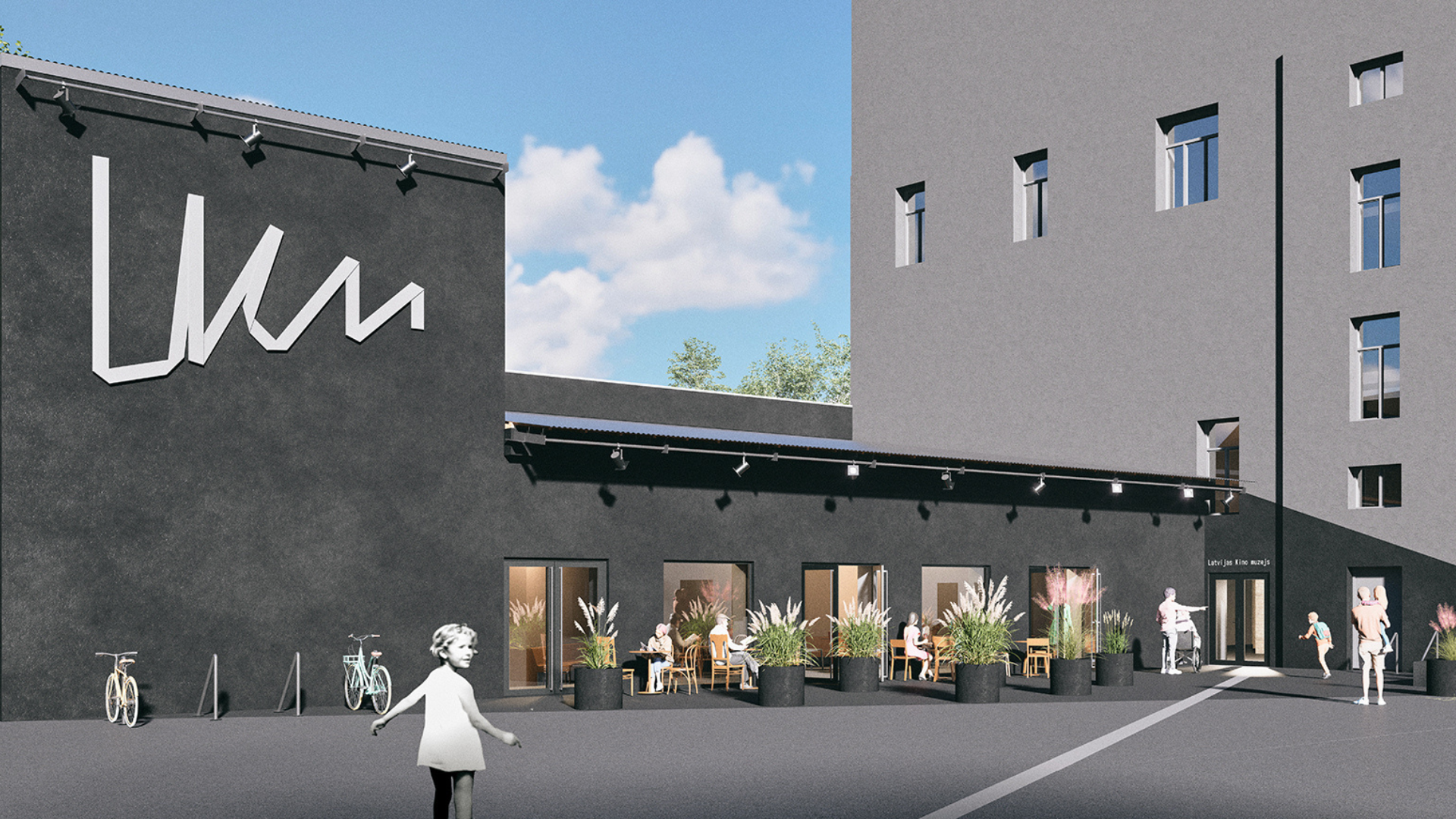
Visualization: Ivars Veinbergs