*EVENTS WILL BE HELD IN LATVIAN WITHOUT ENGLISH TRANSLATION!
On September 5 at 6:00 p.m., the Latvian Film Museum invites you to a lecture titled “Cinema Days ’86 – 40th Anniversary!”,
and on September 4 and 5, you can visit the installation near the National Film School, where we will be showing
video and photo materials about Cinema Days ’86. We look forward to seeing you in the Miera Street neighborhood, at 58a Miera Street!
Event Schedule:
Installation near the National Film School featuring video and photo materials about Cinema Days ’86:
September 4, 2026, from 6:00 p.m. to 10:00 p.m.
September 5, 2026, from 6:00 p.m. to 2:00 a.m.
Educational lecture on Cinema Days ’86 at the Latvian Film Museum:
September 5, 2026, from 6:00 p.m. to 7:00 p.m.
Photo: Valdis Lavrinovičs. The 1st International “Arsenāls” Festival, 1988. Installation of festival advertisements near the House of Knowledge.
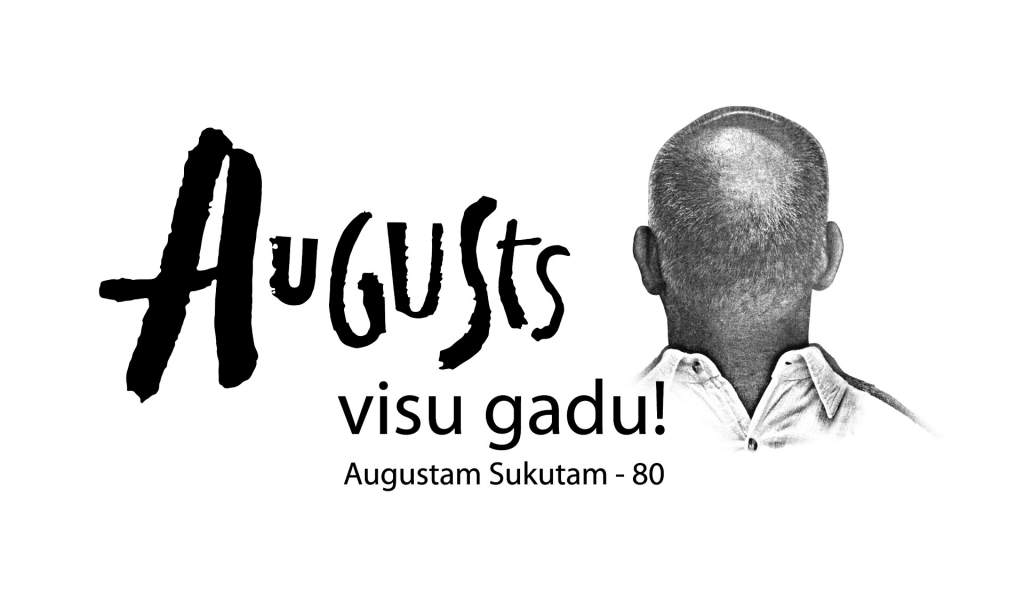
Next year, we will celebrate the 80th birthday of director Augusts Sukuts. With the help of the project “August All Year Round,”
we will hold various events throughout the year dedicated to the legacy of the talented and imaginative Augusts
Sukuts. The “Cinema Days ’86” anniversary event serves as the kickoff for this project.
It has been 40 years since “Cinema Days ’86”—a landmark event in the history of Latvian cinema. The Video Department, established in 1986 within the Latvian Cinematography Committee, was tasked with introducing new technologies and forms into the Latvian film system, as well as promoting the art of cinema. The most joyful event organized by the department and its chief creative force, director Augusts Sukuts, was “Cinema Days ’86” in August 1986. The previously celebrated Soviet Cinema Days were replaced by celebrations marking the birth of cinema. The event marked 90 years since the first films from the cinematograph invented by the French Lumière brothers were screened in Riga in 1896.
“Cinema Days ’86” presented cinema as an endless spectacle and a field of experiences. There were no boundaries between art forms during “Cinema Days”—filmmakers, theater actors and directors, visual artists, photographers, musicians, and writers all participated in organizing and celebrating the event. “The ‘Cinema Days’ were our conviction and our audacity,” said Augusts Sukuts.
The culmination of the festival was the week’s finale in Arkādija Park. In every corner of Arkādija Park, as well as near and on Mara Pond, one could see art installations and performances born of boundless imagination, some of which carried a strong subtext of social criticism. Everything that followed—the establishment of the Riga Video Center, the Riga (now Latvian) Film Museum, and the “Arsenāls” International Film Festival—was largely the result of the sense of cinematic inadequacy created by “Film Days ’86”!
Supported by: